Garden drainage in Bounds Green
If your lawn stays soggy after rain, your patio turns slippery, or planting beds keep flooding, garden drainage in Bounds Green can make a real difference to how your outdoor space looks and works. Local gardens in and around Bounds Green often deal with heavy clay soil, compacted ground, narrow side access, and older property layouts that do not always cope well with wet weather. Whether you have a small rear garden, a shared access path, or a larger family space, effective drainage helps protect plants, surfaces, and the day-to-day enjoyment of your garden.
For local homeowners, landlords, and businesses, drainage problems are more than just an inconvenience. Standing water can damage turf, weaken paving, encourage moss and algae, and create muddy patches that are difficult to use. In some cases, poor runoff can also affect fences, sheds, and foundations near the garden edge. A properly planned drainage solution helps move excess water away from problem areas and supports a cleaner, safer, more practical outdoor space all year round.
Choosing a local team for garden drainage Bounds Green means working with people who understand the conditions common in the area. From narrow terraced side returns and shared garden entrances to larger suburban plots around nearby parts of north London, local knowledge matters when planning the right fix. A practical drainage system should fit the property, the ground conditions, and how the garden is actually used.
Why garden drainage matters in Bounds Green

Bounds Green properties can face a mix of drainage challenges. Some gardens sit on ground that holds water for too long after rain. Others have old turf laid on compacted soil, paving that has settled unevenly, or borders that collect runoff from adjacent surfaces. When water has nowhere to go, it tends to pool in the same spots, making those areas hard to use and difficult to maintain.
Good drainage helps create a healthier growing environment and reduces the stress on outdoor surfaces. Plants generally perform better when roots are not sitting in waterlogged soil. Lawns recover more quickly, paths are less likely to become slippery, and paved areas stay cleaner for longer. Even in relatively small gardens, the effect of a well-designed drainage system can be immediate and noticeable.
Drainage is also valuable for properties where the garden is used frequently. Families want usable space for children, pets, entertaining, and everyday movement. Businesses with outdoor areas, service yards, or access routes need the ground to stay safe and dependable. In all these cases, drainage is not an optional extra; it is part of making the space functional.
Common drainage problems we see in local gardens
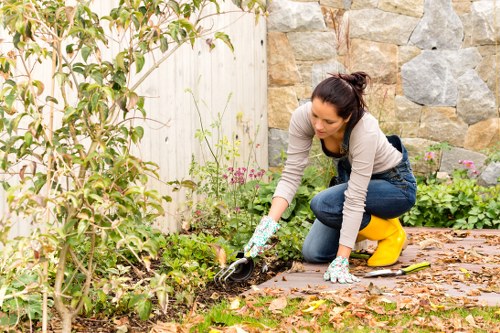
There are several signs that your garden may need drainage work. The most obvious is standing water after rainfall, especially if it remains for hours or days. Persistent dampness often points to slow absorption in the soil, blocked water flow, or poor levels around the garden.
Another common issue is soft, muddy, or uneven ground. When the soil becomes saturated regularly, it may start to compact or lose structure, making the surface difficult to walk on. Lawns can thin out, weeds may take over, and decorative borders may become waterlogged. In paved spaces, water can sit in joints and encourage moss, algae, and staining.
You may also notice overflowing from roof drainage, downpipes discharging in the wrong place, or water running toward the house or shed instead of away from it. In some Bounds Green gardens, the problem is not a single blocked point but a combination of slope, soil type, and hard landscaping that traps water where it should be carried away.
Our garden drainage services
We provide drainage solutions designed around the property rather than one-size-fits-all fixes. The best approach depends on the layout of your garden, how severe the problem is, and whether you need help with turf, paving, planting areas, or the whole space.
Typical services for garden drainage in Bounds Green may include:
- Soakaway installation to help disperse excess water into the ground
- French drains for collecting and moving water away from wet zones
- Channel drains for paved areas, patios, and access paths
- Land drainage pipes for larger or more persistent wet patches
- Regrading and levelling to improve surface fall and runoff direction
- Downpipe redirection so rainwater discharges more effectively
- Garden excavation and relaying where existing levels or materials are contributing to the issue
In many cases, the right answer is a combination of methods. For example, a patio may need a linear channel drain, while a waterlogged lawn may benefit from a French drain or a new soakaway. A practical drainage plan should take the whole garden into account, not just the wettest patch on the day of inspection.
How the service works
Every property is different, so the process usually begins with a site assessment. The aim is to understand where water is gathering, how it moves through the garden, and what may be causing the problem. In Bounds Green, that often means looking closely at boundaries, slopes, access points, paved sections, soil condition, and the position of existing rainwater outlets.
Once the problem areas are identified, the next step is to recommend a solution that fits the space and your priorities. Some customers want the quickest practical fix to make the garden usable again. Others are planning a larger landscaping project and want drainage built in at the same time. Either way, the goal is the same: move excess water away efficiently and prevent recurring damage.
After planning, the work may involve excavation, installing drainage components, connecting run-off routes, improving levels, and restoring the area cleanly once the system is in place. A good installation should be effective, tidy, and suited to the way the garden will be used over the long term.
What is usually included
When arranging garden drainage Bounds Green services, customers often want to know what is included. The exact scope depends on the problem, but a typical job may include:
- Initial inspection and assessment of the wet area
- Discussion of possible drainage options
- Excavation of the affected section where needed
- Installation of pipes, drains, soakaways, or related components
- Improving ground levels or falls where this will help water move correctly
- Testing the drainage route once installed
- Backfilling, reinstatement, and clearing away waste generated by the work
Important: the exact service plan should always reflect the garden’s layout and the nature of the water problem. A careful, tailored approach is usually better than simply digging a trench and hoping it solves the issue.
Why a local Bounds Green team can be helpful
Drainage is one of those services where local experience really matters. Bounds Green has a variety of property types, from older homes with long rear gardens to newer or renovated homes with compact outdoor spaces. Access can be tight, parking may be limited, and some sites have shared walkways or side passages that affect how equipment and materials are brought in.
A local team is more likely to understand the practical issues before work begins. That can save time during planning and reduce surprises on site. It also means the drainage solution can be matched more closely to the sort of ground conditions seen across the area, including compacted garden soil, mixed hard landscaping, and spaces where water naturally flows toward low points.
For commercial customers, local knowledge is equally useful. Offices, retail units, managed properties, schools, hospitality venues, and small industrial premises may all have outdoor areas that need better water control. The right drainage setup helps reduce disruption and keeps entrances, service zones, and pathways more manageable.
Residential and commercial drainage solutions
We work with both domestic and commercial customers across Bounds Green and nearby neighbourhoods. Homeowners often need help with lawns, patios, drives, side returns, and planted borders. Common residential concerns include boggy grass, muddy footpaths, and water collecting near sheds or extensions.
Commercial sites usually need reliable drainage that supports regular footfall and day-to-day operations. This may involve managing water around entrances, loading areas, courtyards, bin stores, or staff outdoor spaces. The priorities are often safety, durability, and minimal disruption during installation.
Whether the project is small or large, the focus remains the same: create a drainage solution that works with the property, not against it. That includes understanding how water enters the area, where it should travel, and how the garden or site is used throughout the week.
Signs you may need a drainage inspection
If you are not sure whether you need action yet, look out for these warning signs:
- Water remains on the surface after moderate rainfall
- Grass feels soft, spongy, or muddy for long periods
- Moss and algae are growing quickly on paving
- Plant beds are constantly saturated
- Rainwater is flowing toward the house, shed, or fence base
- You notice sinking, rutting, or pooling in the same places repeatedly
These signs do not always mean major work is needed, but they do suggest the drainage should be reviewed before the problem gets worse. A timely fix is often more straightforward than waiting until the soil or hard landscaping has been heavily affected.
Preparing for drainage work
Homeowners often ask how they should prepare before drainage work begins. A little preparation can help the job run smoothly, especially in gardens where access is tight or where there are items stored near the work area.
Preparation checklist:
- Clear personal items from the work zone, including pots, furniture, toys, and tools
- Make gates or side access routes easy to open
- Highlight any underground services or known hazards if you are aware of them
- Move vehicles if access is required for materials or equipment
- Let the team know about pets, delicate planting, or areas you want protected
In gardens with limited access, it may also help to think about how waste will be removed and where materials can be stored temporarily. Local jobs often require practical planning, especially in terraced streets or properties with narrow passages. A good team will explain what they need and keep disruption to a sensible minimum.
What affects the cost of garden drainage?
Customers naturally want to know what influences the price of drainage work. While exact costs vary from job to job, several factors usually play a part. The first is the type and scale of the issue. A simple surface water problem may need a smaller intervention than a garden with widespread waterlogging or badly laid levels.
Other factors include the chosen drainage method, how much excavation is needed, the depth of the work, the presence of existing paving or structures, and how easy it is to access the site. Soil type is also important. Some Bounds Green gardens have ground that drains slowly and may need a more substantial solution than areas with looser, freer-draining soil.
Additional considerations can include reinstatement work, such as relaying turf, rebuilding a patio section, or replacing decorative finishes after the drainage system has been fitted. If you are comparing options, it is usually better to ask what is included in the proposal so you can understand how the work will be carried out and what result to expect.
Why proper drainage can save money over time
Although drainage work is an upfront investment, it can reduce ongoing problems and repeated patch repairs. Better water management can extend the life of paving, reduce lawn damage, limit soft ground repairs, and help keep outdoor surfaces cleaner. In many cases, the cost of regularly treating the symptoms is higher than addressing the root cause properly.
For landlords and commercial property managers, drainage improvements can also reduce complaints, minimise maintenance calls, and help outdoor spaces remain presentable. A surface that stays wet or slippery is more likely to need frequent attention. Solving the drainage issue can make routine upkeep much easier.
Why choose a specialist for garden drainage Bounds Green
Drainage work looks simple from the outside, but it relies on getting the details right. The direction of fall, the depth of pipework, the soil conditions, and the outlet choice all matter. If any part is poorly planned, water can simply reappear in another area of the garden.
A specialist approach gives you a better chance of a lasting result. Instead of using guesswork, the drainage layout should be based on where water naturally collects and how the property handles runoff. That is particularly important in Bounds Green, where a mix of older garden layouts and modern alterations can create complicated flow patterns.
Choosing a local company can also make it easier to arrange work around access, deliveries, and the practical realities of the area. You are more likely to get a solution that has been considered with nearby property types in mind, rather than a generic answer that may not suit your space.
Areas covered
We provide garden drainage support across Bounds Green and surrounding parts of north London. This includes nearby residential streets, mixed-use neighbourhoods, and local commercial premises that need help managing surface water. If your property sits close to Bounds Green and you are dealing with persistent water issues, it is worth arranging an inspection to see what is possible.
Local customers often contact us from areas with similar ground and access challenges, including places where rear gardens are long and narrow, where paving has settled over time, or where rainwater needs to be redirected away from boundaries and entrances. If you are unsure whether your location is covered, the simplest next step is to enquire and explain the issue.
Frequently asked questions
How do I know if my garden needs drainage work?
If water remains in the same areas after rainfall, your lawn stays soggy, or paths and patios are regularly slippery, drainage work may help. Repeated waterlogging is usually a sign that the ground is not moving water away effectively.
Can drainage be added to an existing garden?
Yes. In many cases, drainage can be installed into an existing garden, patio, or lawn area. The exact method depends on the current layout and how much excavation or reinstatement is needed.
Will drainage damage my garden?
Some disturbance is usually unavoidable during installation, especially if excavation is required. However, the work should be planned carefully so that disruption is controlled and the area is restored neatly afterwards.
Is a soakaway always the best option?
No. Soakaways are useful in some gardens, but they are not the answer to every drainage problem. The right solution may instead involve channels, French drains, land drainage, or improving the surface levels.
Do I need drainage for a patio or paved area?
If water sits on the surface or runs toward the house, patio drainage can be very helpful. Channel drains and adjusted falls often make paved areas safer and easier to maintain.
How long does drainage work take?
The timescale depends on the size of the garden, the type of system being installed, and how much reinstatement is involved. A small corrective job may be quicker than a full drainage redesign.
Book your drainage solution
If you are dealing with a wet lawn, a flooded border, or a patio that never seems to dry properly, now is the right time to act. Garden drainage in Bounds Green is about more than fixing a muddy patch; it is about making your outdoor space usable, safer, and easier to care for.
Contact us today to discuss the issue, request a free quote, or book your service now. A practical drainage plan can transform how your garden performs in wet weather and give you a space that works far better throughout the year.
If you want to make the most of your outdoor space, start with the ground beneath your feet.